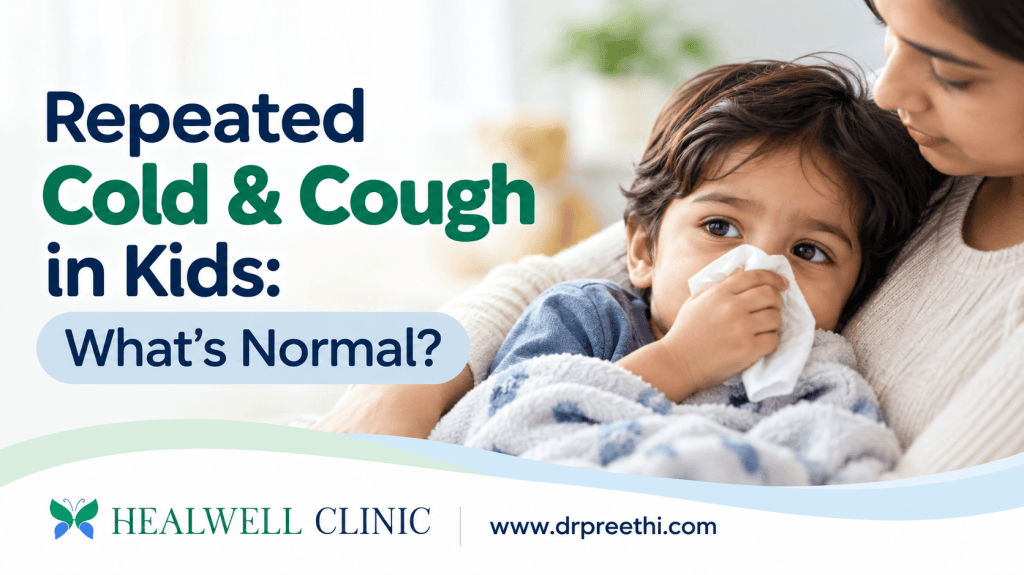
Does your child seem to catch a cold every few weeks? Just when the runny nose settles, another episode of sneezing, coughing or fever begins. For many parents, it can feel as though their child is constantly sick.
The good news is that frequent colds are common in young children. However, not every episode of a runny nose or cough is caused by a new infection. Allergies, enlarged adenoids and other conditions can sometimes produce similar symptoms.
So, how often is too often? When should you consult an ENT specialist or paediatrician? And what can you do at home to help your child recover?
Let’s look at what parents need to know about repeated cold and cough in children.
How many colds a year are normal in children?
Young children are still developing immunity to the many viruses that cause respiratory infections. They also tend to spend time in close contact with other children at daycare, preschool and school, making infections easier to spread.
As a general guide:
- Babies and toddlers: Around 8–10 colds a year can occur, particularly during the first two years of life.
- Preschool and school-going children: Frequent infections may continue, especially when they attend daycare or school.
- Older children: The frequency of colds generally decreases as they grow and develop immunity.
These are approximate figures, not strict limits. Some healthy children have fewer infections, while others have more.
A child who catches several colds a year is not necessarily suffering from low immunity. What matters is how severe the infections are, how well the child recovers between episodes, and whether growth and general health are normal.
Why does my child keep getting a cold and cough?
Several factors can explain repeated episodes of cold and cough in children.
1. Repeated viral infections
Viruses are the most common cause of the common cold. Since many different viruses can produce similar symptoms, a child can develop one infection soon after recovering from another.
This is particularly common in children who attend daycare, preschool or school, or have older siblings.
2. Symptoms from one cold may linger
A cold does not always disappear completely within a few days. Nasal congestion and a runny nose may last around 1–2 weeks, and a cough can persist for longer.
If a child catches another virus before the previous symptoms have fully resolved, it may seem like one continuous illness.
3. Allergic rhinitis
Not every runny nose is an infection. Allergic rhinitis could mimic cold too. Symptoms may recur after exposure to dust mites, mould, pollen or other allergens.
Clues that suggest allergy include:
- Frequent bouts of sneezing, especially in the morning.
- Itching of the nose or eyes.
- Clear nasal discharge without fever.
- Symptoms that persist or recur in particular environments.
Unlike a viral cold, allergic rhinitis can continue for weeks or months if the trigger remains present.
4. Enlarged adenoids
The adenoids are lymphoid tissue located behind the nose. They help the immune system, but when enlarged, they can obstruct nasal airflow and contribute to persistent nasal symptoms.
Look for:
- Persistent mouth breathing.
- Snoring during sleep.
- A constantly blocked nose.
- Nasal-sounding speech.
- Restless sleep or pauses in breathing during sleep.
- Recurrent ear infections or hearing difficulties.
A child who seems to have a permanent cold, especially with mouth breathing and snoring, may need an ENT evaluation for enlarged adenoids.
5. Missed foreign body in the nose
A missed foreign body (commonly beads, nuts, eraser pieces) in one or both of the nostrils can cause persistent nasal discharge. The discharge turns foul-smelling over time. This requires an evaluation by an ENT specialist.
6. Other causes of recurrent cough
A cough that keeps returning may sometimes be related to asthma or another respiratory condition rather than repeated colds alone.
A cough that is worse at night, occurs during running or exercise, or is accompanied by wheezing deserves assessment.
Depending on the history, a doctor may also consider sinusitis, environmental irritants, or less common underlying conditions.
When should you worry about repeated cold and cough?
The number of infections alone is not enough to determine whether a child has an underlying problem.
Arrange a medical evaluation if your child has any of the following:
- Persistent symptoms: Nasal discharge or congestion lasting beyond 3 days without improvement, or a cough lasting more than 10 days.
- Repeated ear infections: Especially when accompanied by ear pain, hearing difficulties or delayed speech.
- Persistent mouth breathing or snoring: Particularly if sleep is disturbed or breathing pauses occur.
- Frequent wheezing or breathlessness: Especially during sleep, exercise or respiratory infections.
- Repeated severe infections: Such as pneumonia, infections requiring hospital admission, or unusually prolonged illnesses.
- Poor growth or weight gain: Particularly when accompanied by persistent diarrhoea or other recurrent infections.
- Symptoms that worsen after improving: A new fever, worsening cough or deterioration after initial recovery may indicate a complication or a new infection.
When is it an emergency?
Seek urgent medical care if your child has:
- Difficulty breathing, very fast breathing or the chest pulling inward with each breath.
- Blue or grey lips or face.
- Unusual drowsiness, difficulty waking or poor responsiveness.
- Signs of significant dehydration, such as markedly reduced urination.
- A fever of 100.4°F or higher.
Do not wait for a routine appointment if your child is struggling to breathe or appears seriously unwell.
How to manage cold and cough at home
Most uncomplicated viral colds improve with time and supportive care.
1. Keep your child hydrated
Offer breast milk, formula or age-appropriate fluids as usual. Encourage older children to drink regularly. Adequate hydration helps prevent dehydration and may make secretions easier to clear.
2. Use saline nasal drops or spray
Age-appropriate saline drops or spray can help loosen nasal mucus and relieve congestion. In babies, gentle nasal suction may be helpful when blockage interferes with feeding or sleep.
Avoid forceful suctioning, which can irritate the nasal lining.
3. Allow adequate rest
Children may need more rest while recovering. They can gradually return to their usual activities as they feel better and their symptoms improve.
4. Avoid unnecessary cough and cold medicines
Over-the-counter cough and cold preparations are not routinely recommended for young children, especially those under 6 years, unless specifically advised by a healthcare professional.
Do not give antibiotics for an uncomplicated viral cold. Antibiotics do not treat viruses, and unnecessary use can cause side effects and contribute to antibiotic resistance.
Frequently asked questions
Is it normal for a child to get a cold every month?
It can happen, particularly in babies, toddlers and children attending daycare or school. However, the pattern of symptoms, severity of infections and recovery between episodes are more important than the frequency alone.
Why does my child always have a runny nose but no fever?
A persistent runny nose without fever may be caused by allergic rhinitis, enlarged adenoids or overlapping viral infections.
Why does my child’s cough continue after a cold?
Coughing can persist after the other symptoms of a viral infection improve. However, a cough lasting more than 3 weeks, or cough associated with wheezing, breathing difficulty or worsening symptoms, should be evaluated.
Do enlarged adenoids cause frequent colds?
Enlarged adenoids can contribute to nasal obstruction, mouth breathing, snoring and ear problems. They may make a child appear to have a constant cold, but they do not necessarily cause repeated viral infections.
Should I give antibiotics for every episode of cold and cough?
No. Most common colds are viral and do not require antibiotics. Antibiotics are appropriate only when a clinician identifies or strongly suspects a bacterial infection for which treatment is indicated.
When should I take my child to an ENT specialist?
Consider an ENT assessment if your child has persistent nasal blockage, habitual mouth breathing, snoring, recurrent ear infections, hearing concerns or symptoms suggestive of enlarged adenoids. Seek urgent care for breathing difficulty or other emergency warning signs. A child with wheezing, breathing difficulty or a persistent chest cough, should be assessed by a pediatrician.
Can frequent colds in children be prevented?
It is not possible to prevent every respiratory infection, but a few measures can reduce the risk of transmission and complications.
- Encourage regular handwashing, especially after wiping the nose or coughing.
- Teach children to cover coughs and sneezes with a tissue or their elbow.
- Keep indoor spaces well ventilated where possible.
- Avoid exposing children to cigarette smoke, vaping aerosols and other airway irritants.
- Keep recommended childhood vaccinations up to date, including influenza vaccination when advised under the applicable immunisation schedule.
- Encourage a varied, age-appropriate diet and adequate sleep.
Does frequent cold and cough mean low immunity?
Not necessarily. A healthy young child may experience several respiratory infections each year, particularly during the first years of life. Frequent uncomplicated infections do not, by themselves, establish an immune deficiency.
Conclusion
Frequent colds are common in children, but persistent symptoms should not automatically be labelled as repeated infections.
Understanding the pattern of symptoms can help you avoid unnecessary medicines and get the right treatment when it is needed.
If you are concerned about your child’s repeated cold and cough, persistent nasal blockage or snoring, consult a qualified ENT specialist or paediatrician for an individual assessment.
Related Reads:
- ENT Problems In Children
- Adenoidectomy
- Vaccines As A Shield Against ENT Infections
- Tonsillectomy And Adenoidectomy: A Guide On What To Expect
- Endoscopic Adenoidectomy: Is It Really Better Than The Conventional Surgery?
- Nose No-No: The Dangers Of Foreign Bodies In The Nose
Medical disclaimer: This article is for general educational purposes and does not replace an individual medical consultation.