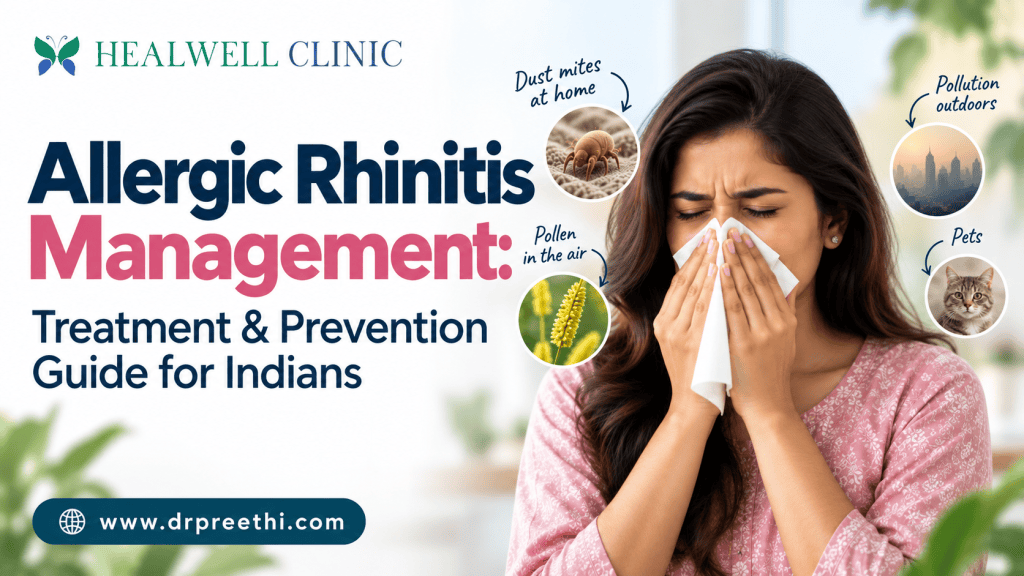
Sneezing every morning, a blocked or runny nose, an itchy nose or watery eyes? These symptoms are often caused by allergic rhinitis.
Allergic rhinitis is common in India and can significantly affect sleep, concentration, work, school performance and quality of life. The good news is that allergic rhinitis can usually be controlled effectively with the right combination of allergen avoidance, nasal treatment and, in selected patients, allergy immunotherapy.
This guide explains how allergic rhinitis is diagnosed and managed, including practical measures that are particularly relevant to Indian homes and environments.
What is allergic rhinitis?
Allergic rhinitis is an allergic inflammation of the lining of the nose.
When a person with an allergy comes into contact with a trigger, the immune system reacts to it. This produces symptoms such as:
- Sneezing, often in repeated bouts
- Runny nose
- Itchy nose
- Blocked or stuffy nose
- Itchy, red or watery eyes
- Postnasal drip
- Reduced sense of smell
- Throat irritation or frequent throat clearing
In India, many people have symptoms because of exposure to indoor allergens such as house-dust mites, while pollen, moulds, pollution and changing weather conditions may worsen symptoms.
An Indian expert consensus published in 2025 also highlighted clinically different symptom patterns.
What causes allergic rhinitis in India?
The triggers vary from person to person. Common triggers include:
1. House-dust mites
House-dust mites are microscopic organisms commonly found in mattresses, pillows, carpets, upholstered furniture and bedding.
They are particularly relevant in homes with warm and humid conditions.
Practical measures:
- Wash bedsheets and pillow covers regularly.
- Use washable mattress and pillow covers.
- Reduce unnecessary carpets and heavy fabric furnishings.
- Keep bedrooms well ventilated.
- Avoid allowing dust to accumulate under beds and furniture.
- If possible, use a vacuum cleaner rather than dry dusting.
You do not necessarily need to make your home completely dust-free. The goal is to reduce significant and repeated exposure to the allergens that trigger your symptoms.
2. Pollen
Trees, grasses and weeds release pollen that can trigger allergic symptoms in susceptible individuals.
Symptoms may become worse during particular seasons or after spending time outdoors.
If pollen is a known trigger:
- Keep windows closed when pollen exposure is high.
- Avoid spending prolonged periods outdoors when symptoms are particularly severe.
- Shower and change clothes after returning home if you have significant pollen exposure.
- Avoid drying clothes outdoors during periods when pollen exposure is high.
3. Mould
Mould can grow in damp areas of the home.
Pay attention to:
- Damp walls
- Bathrooms
- Poorly ventilated rooms
- Air-conditioner areas
- Damp cupboards
- Water leakage
Fixing the source of moisture is more useful than simply cleaning visible mould repeatedly.
4. Pets
Some people develop allergic symptoms because of exposure to fur and feathers from pets, such as cats, dogs, love birds, parrots.
If you suspect a pet allergy, discuss appropriate testing and exposure reduction with your doctor rather than automatically giving up your pet.
5. Air pollution and smoke
Air pollution does not necessarily mean that a person is allergic to pollution. However, pollutants can irritate the nose and may worsen rhinitis symptoms.
Cigarette smoke, incense (Agarbhattis), mosquito coils and other forms of indoor smoke can also irritate the nose.
For people living in heavily polluted urban environments, reducing exposure when pollution levels are particularly high may help symptom control.
How is allergic rhinitis diagnosed?
Allergic rhinitis is usually diagnosed from the history and examination.
An examination of the nose may reveal swollen, pale nasal tissue and other findings suggestive of allergy.
Does everyone with allergic rhinitis need an allergy test?
No.
Allergy testing can be useful when:
- Symptoms are persistent or difficult to control.
- The trigger is unclear.
- Identifying the allergen would change management.
- Poor response to medical management.
- Allergen immunotherapy is being considered.
- There is a significant mismatch between symptoms and suspected triggers.
Depending on the situation, testing may involve a skin-prick test or blood testing for specific IgE.
How is allergic rhinitis treated?
Effective management usually involves several components rather than simply taking an antihistamine whenever symptoms occur.
The main approaches are:
- Trigger reduction
- Intranasal medications
- Oral antihistamines when appropriate
- Allergen immunotherapy in selected patients
The latest ARIA-EAACI 2024–2025 recommendations place an important emphasis on intranasal treatment, with intranasal corticosteroids generally preferred over intranasal antihistamines when choosing a single intranasal medication. For patients who need additional control, a combination intranasal antihistamine plus corticosteroid can be considered.
Can allergic rhinitis be cured permanently?
Allergic rhinitis can often be controlled very effectively, but it is usually a chronic tendency rather than a condition that disappears permanently after a short course of medication.
Symptoms can fluctuate depending on allergen exposure, season, environment and individual susceptibility.
Allergen immunotherapy can modify the allergic response in appropriately selected patients, but it is not necessary for everyone.
The goal of treatment is not simply to take a tablet whenever you sneeze. It is to achieve good long-term symptom control with the least treatment necessary.
Common mistakes people make when treating allergic rhinitis
❌ Taking an antihistamine only when symptoms become severe
For persistent allergic rhinitis, a structured treatment plan suggested by your ENT specialist may work better than repeatedly reacting to severe symptoms.
❌ Stopping the nasal steroid after two or three days
Nasal corticosteroids are anti-inflammatory medicines. They may require consistent use to achieve their full benefit. Follow the specific instructions given by your ENT doctor.
❌ Using nasal decongestant sprays for weeks
This can result in rebound congestion.
❌ Blaming every blocked nose on allergy
A deviated nasal septum, nasal polyps, chronic sinusitis, enlarged turbinates and other conditions can also cause nasal obstruction.
❌ Trying every available allergy test
A test should be interpreted in the context of the person’s symptoms and exposure history. A positive test does not automatically mean that the allergen is responsible for every symptom.
Frequently Asked Questions About Allergic Rhinitis
What is the best treatment for allergic rhinitis?
There is no single treatment that is best for every patient. For many people with persistent allergic rhinitis, an intranasal corticosteroid is an important first-line treatment. Combination intranasal corticosteroid plus antihistamine therapy may be considered when additional symptom control is needed. Consult an ENT specialist for a tailored treatment regimen to achieve the best results.
Is allergic rhinitis common in India?
Yes. Allergic rhinitis is a significant and increasingly recognised health problem in India, with indoor allergens, environmental exposures and climatic conditions all potentially contributing.
Is allergic rhinitis caused by dust?
Dust itself is not necessarily the allergen. In many homes, house-dust mites and their particles are important indoor allergens. This is commonly known as dust allergy in India. Other components of household dust can also trigger symptoms.
Can allergic rhinitis cause a blocked nose?
Yes. Nasal congestion is one of the major symptoms of allergic rhinitis. In some people, nasal blockage is the predominant complaint.
Can allergic rhinitis cause headaches?
It can be associated with facial pressure or discomfort, particularly when the nose is significantly congested. However, recurrent headaches should not automatically be attributed to sinus or nasal allergy. Other causes of headache should be considered.
Can allergic rhinitis cause snoring?
Yes. Persistent nasal obstruction can contribute to mouth breathing and snoring. If snoring is loud, persistent or associated with pauses in breathing during sleep, further evaluation may be necessary.
Is nasal steroid spray safe?
When appropriately prescribed and correctly used, intranasal corticosteroids are widely used for allergic rhinitis. They act primarily within the nose and have relatively low systemic exposure. Correct spray technique also helps minimise local problems such as irritation and nosebleeds.
Can I use a nasal decongestant every day?
Nasal decongestant sprays should generally not be used continuously without medical supervision because prolonged use can cause rebound congestion.
Do I need an allergy test?
Not necessarily. Many patients can be diagnosed clinically. Testing becomes more useful when the diagnosis is uncertain, symptoms are difficult to control, or allergen immunotherapy is being considered.
Can allergic rhinitis go away on its own?
Symptoms may become less troublesome over time, but allergic rhinitis can also persist for years. Treatment is aimed at controlling symptoms and reducing their impact on daily life.
Conclusion
Allergic rhinitis is treatable, but good management requires more than simply taking an antihistamine whenever you sneeze.
For most patients, the approach involves identifying important triggers, reducing avoidable exposure, and selecting the right medication.
For persistent or difficult-to-control symptoms, an ENT or allergy specialist can assess whether you need allergy testing, combination treatment or allergen immunotherapy.
Book an appointment with us if you wish to get your allergic rhinitis evaluated and treated.
Related Reads
- Conquer Spring Allergies: Essential Tips For Relief
- Using Nasal Sprays: A Step-By-Step Guide
- Blocked Nose: Some Quick Home Remedies
- Difference Between Sinusitis, Colds And Allergies: Can Sinus Infections Cause Cold?
- What Causes Sneezing
This article is for general information and does not replace an individual medical consultation. Medication choices, particularly for children, pregnancy, breastfeeding, asthma or other medical conditions, should be discussed with a qualified ENT specialist.