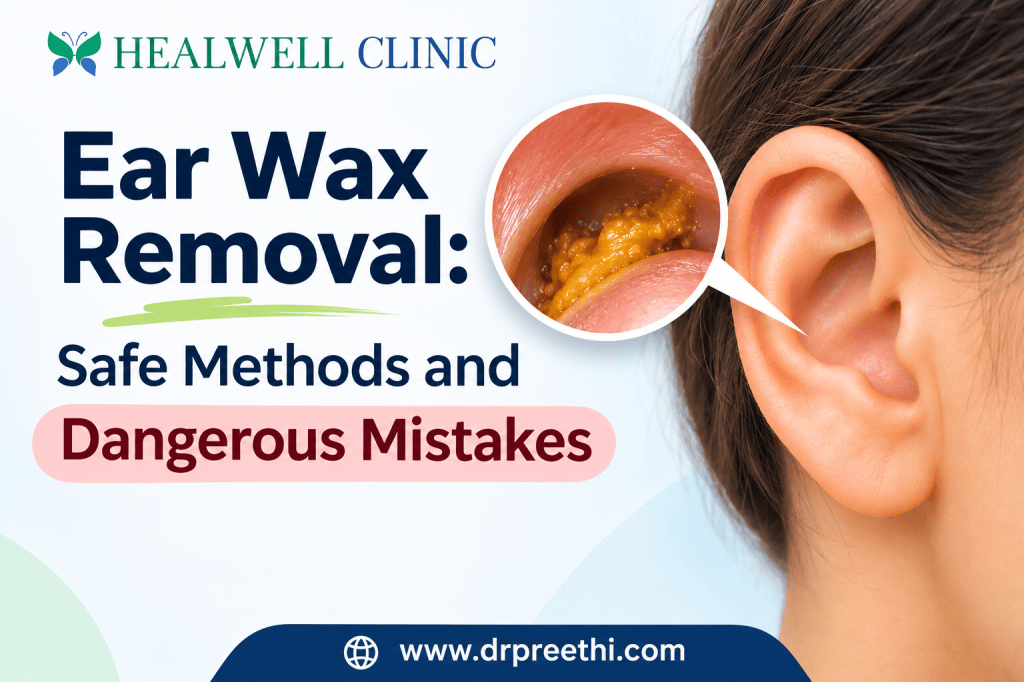
Ear wax is a natural part of ear canal. It protects the ear canal from dust, dirt, insects, and infection while keeping the skin inside the ear moisturised. In most people, ear wax gradually moves out of the ear canal on its own, without the need for regular cleaning.
However, when ear wax accumulates it may need to be removed.
The safest way to remove ear wax depends on whether it is causing symptoms, how hard the wax is, and whether the ear has any underlying problems.
In this article, we will discuss safe methods of ear wax removal, when ear wax needs treatment, and the common mistakes that can damage your ears.
When does ear wax need to be removed?
Not all ear wax needs to be removed. A small amount of wax in the ear canal is normal and healthy.
Ear wax removal may be necessary when the wax:
- Causes a blocked sensation in the ear
- Leads to reduced hearing
- Causes discomfort or earache
- Produces tinnitus or ringing in the ears
- Prevents examination of the ear drum
- Interferes with hearing aid function
- Causes symptoms in someone who cannot adequately communicate their discomfort, such as a young child
A person with ear wax but no symptoms may not require any treatment, particularly if the ear canal and ear drum can be adequately examined.
What are the symptoms of impacted ear wax?
Excessive or impacted ear wax may cause:
- Blocked ear sensation
- Hearing loss
- Ear discomfort or pain
- Tinnitus
- Itching
- Dizziness
If you experience sudden hearing loss, do not assume that it is caused by ear wax. Seek urgent medical evaluation.
What are the safest methods of ear wax removal?
There are three commonly used medical methods for removing impacted ear wax.
1. Ear wax-softening drops
Ear wax-softening drops, also known as cerumenolytics, help soften hard wax so that it can move out of the ear naturally or be removed more easily.
Wax-softening drops may not completely clear an impacted wax. Sometimes they are used as a preparation for removal rather than as the definitive treatment.
2. Ear irrigation
Ear irrigation involves gently flushing the ear canal with water to remove ear wax.
However, irrigation is not suitable for everyone.
It should generally be avoided in patients with:
- A perforated ear drum or suspected ear drum perforation
- Previous ear surgery
- Ventilation tubes or grommets
- Active ear infection
- Certain anatomical abnormalities of the ear canal
- A history of complications with ear irrigation
3. Manual removal or microsuction
Manual ear wax removal is performed by an ENT specialist using instruments such as a curette, forceps or suction under direct visualisation.
Microsuction involves using a small suction device to remove ear wax.
The procedure allows the doctor to remove wax in a controlled manner while directly examining the ear canal.
Can ear wax be removed at home?
If you have mild wax accumulation without symptoms, you usually do not need to do anything.
If you suspect wax buildup or if the wax is causing significant blockage, pain or hearing loss, it is better to have your ear examined.
Do not attempt to remove deeply impacted wax by inserting objects into your ear canal.
The safest home ear-care routine is simple:
- Clean the outer ear with a soft, damp cloth.
- Avoid inserting cotton buds, fingers or other objects into the ear canal.
- Avoid aggressive cleaning.
- Seek medical advice if you develop symptoms of wax blockage.
Dangerous mistakes to avoid while removing ear wax
1. Using cotton buds or Q-tips
Cotton buds are one of the most common causes of ear wax impaction.
Instead of removing wax, they often push it deeper into the ear canal. Repeated use may cause:
- Impacted ear wax
- Scratches inside the ear canal
- Bleeding
- Ear canal infection
- Injury to the ear drum
Cotton buds can be used only to clean the outer ear, not the inside of the ear canal.
2. Using ear candles
Ear candling or ear coning involves placing a hollow candle-like device into the ear and lighting the opposite end.
There is no reliable evidence that ear candling removes ear wax.
It can cause:
- Burns to the ear or face
- Hot wax entering the ear canal
- Ear canal obstruction from candle wax
- Injury to the ear drum
Ear candles should not be used for ear wax removal.
3. Using high-pressure water jets
Devices such as water picks or dental water jets should not be used to remove ear wax.
The pressure generated by these devices may injure the delicate structures of the ear canal or ear drum.
Even devices marketed for ear cleaning should not automatically be assumed to be safe for everyone.
4. Scraping the ear with hairpins, keys or other objects
People sometimes use hairpins, matchsticks, keys, pen caps or other objects to remove visible wax.
These objects can cause serious injury because the ear canal is narrow and the ear drum is located at its inner end.
Never insert sharp or rigid objects into your ear canal.
Who is more likely to develop excessive ear wax?
Routine cleaning of the ear canal is not necessary for everyone.
Some people naturally produce more ear wax or have difficulty clearing it from the ear canal.
Excessive accumulation may be more common in:
- Older adults
- People who regularly use hearing aids
- People who frequently use ear plugs
- Individuals with narrow or anatomically unusual ear canals
- People with a history of recurrent ear wax impaction
- Individuals who frequently insert objects into their ears
If you repeatedly develop impacted ear wax, your ENT specialist may recommend periodic ear examination and an individualised prevention plan.
How can you prevent ear wax buildup?
The ear canal has a natural self-cleaning mechanism. Movements of the jaw, such as chewing and talking, help move ear wax gradually towards the opening of the ear.
To maintain healthy ears:
- Avoid inserting cotton buds into the ear canal.
- Avoid unnecessary ear cleaning.
- Clean only the outer ear.
- Use ear plugs and hearing aids appropriately and keep them clean.
- Seek professional advice if you repeatedly develop wax blockage.
- Avoid home remedies or devices that can injure the ear.
If you are prone to excessive wax, prevention should be tailored to your ear examination and medical history.
Frequently Asked Questions (FAQs)
1. What is the safest way to remove ear wax?
The safest method depends on the type and amount of wax, your ear anatomy and your medical history. Wax-softening drops, irrigation and manual removal are commonly used. Manual removal or microsuction may be preferred in people with previous ear surgery or suspected ear drum perforation.
2. Can ear wax come out on its own?
Yes. In most people, ear wax moves gradually towards the opening of the ear canal and comes out naturally. Regular cleaning of the inside of the ear is unnecessary.
3. How long do ear wax-softening drops take to work?
Depending on the product and the consistency of the wax, drops may be used for several days. Hard, impacted wax may require professional removal even after using softening drops.
4. Is ear irrigation safe?
Ear irrigation can be effective when performed in appropriately selected patients using suitable equipment and technique. It is not recommended for everyone. Patients with ear drum perforation, previous ear surgery, ear tubes or active ear infection may require an alternative method.
5. Can ear wax cause hearing loss?
Yes. Impacted ear wax can block sound transmission through the ear canal and cause temporary conductive hearing loss. However, hearing loss should not automatically be attributed to wax. Sudden hearing loss requires urgent evaluation.
6. Should I clean my ears regularly?
No. Most people do not need to clean the inside of their ears regularly. Cleaning the outer ear with a damp cloth is sufficient.
7. Is microsuction painful?
Microsuction is usually well tolerated, although some people may experience discomfort, sensitivity or loud sounds during the procedure. The experience depends on the amount and consistency of wax and the sensitivity of the ear canal.
The Takeaway:
Ear wax is a natural protective substance, and most ears do not need regular cleaning.
When ear wax becomes impacted and causes symptoms, it can be treated using wax-softening drops, irrigation or manual removal by a trained professional.
The biggest mistake is trying to remove ear wax aggressively at home. Cotton buds, ear candles, sharp objects and high-pressure water jets can cause more harm than the wax itself.
If you have a persistent blocked ear, hearing loss, ear pain or other symptoms, consult an ENT specialist to confirm the cause and choose the safest method of treatment.
Related Reads
- Debunking Myths About Ear Wax: Care Tips
- How to Clean Your Ears If You Are Not Supposed to Use Q-Tips or Ear Buds
- Why Should You Not Use Q-Tips (Ear Buds)?
- Say No to Ear Buds: A Guide to Care for Your Ears
- Debunking Common ENT Myths
This article is for educational purposes and does not replace an examination by an ENT specialist.