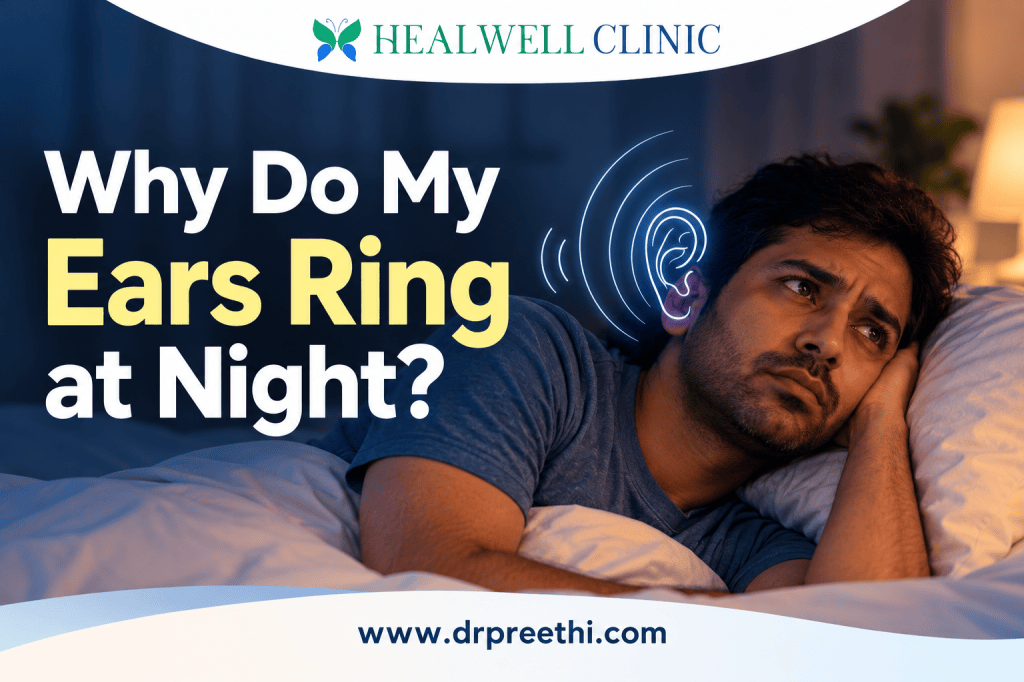
Do you notice a ringing, buzzing, humming or whistling sound in your ears when you lie down at night? You may hear it more clearly at bedtime, especially when everything around you is quiet.
Night-time ear ringing is often due to tinnitus becoming more noticeable in quiet surroundings. However, persistent ringing can sometimes indicate an underlying ear or hearing problem.
Why Does Ear Ringing Get Worse at Night?
The sound may not actually become louder at night. During the day, background noise keeps you distracted. At bedtime, the silence makes tinnitus more noticeable.
Other factors, such as stress, poor sleep and certain ear conditions, can also contribute.
Common Causes of Ringing in the Ears at Night
1. Tinnitus
Tinnitus is the perception of sound without an external source. It may sound like ringing, buzzing, humming or whistling and can affect one or both ears. It is a symptom rather than a disease.
2. Earwax Build-up
Excess earwax can block the ear canal, causing a blocked sensation, reduced hearing and sometimes tinnitus.
3. Hearing Loss
Age-related hearing loss and hearing damage from loud noise exposure (Noise induced hearing loss) can cause tinnitus. Sometimes, ringing is the first noticeable symptom of an underlying hearing problem.
4. Stress and Anxiety
Stress can make tinnitus more noticeable and distressing. Poor sleep may further increase awareness of the sound, creating a cycle of ringing and difficulty sleeping.
5. Middle Ear Problems
Fluid behind the eardrum, ear infections, ruptured ear drum, otosclerosis and other middle-ear conditions may cause ringing, pressure or reduced hearing.
6. Certain Medications
Some medicines can cause or worsen tinnitus, particularly at higher doses. If your symptoms begin after starting a medication, discuss this with your doctor. Do not stop prescribed medication on your own.
How Can You Reduce Ear Ringing at Night?
A few simple measures may make tinnitus less noticeable and help you sleep better.
- Use gentle background sound: A fan, soft music or a white-noise machine can make the ringing less prominent.
- Maintain a regular sleep schedule: Consistent sleep and wake times can improve sleep quality.
- Manage stress: Relaxation exercises, slow breathing and regular physical activity may help.
- Avoid loud noise: Keep headphone volumes moderate and use hearing protection in noisy environments.
- Review your medications: Ask your doctor whether any medicines could be contributing to the symptoms.
- Avoid inserting objects into your ears: Cotton buds can push earwax deeper into the canal and affect your ear drum.
Avoid complete silence if it makes the ringing more noticeable. Gentle background sound is often more helpful than trying to mask tinnitus with loud music.
When Should You See an ENT Specialist?
Occasional ringing may not indicate a serious problem. However, consult an ENT specialist if you experience:
- Persistent or recurrent ringing in your ears.
- Ringing mainly in one ear.
- Associated hearing loss, ear pain or a blocked-ear sensation.
- A sound that beats in time with your heartbeat.
Seek urgent medical assessment if tinnitus occurs with sudden hearing loss. Sudden hearing loss requires prompt treatment, ideally the same day. Ringing accompanied by severe dizziness, facial weakness or other sudden neurological symptoms also requires emergency assessment.
How Is Tinnitus Diagnosed?
An ENT specialist will examine your ears and assess your symptoms. Depending on the findings, you may need a hearing test (audiometry) and, in selected cases, further investigations.
Treatment depends on the cause. Earwax removal may help when wax is responsible, while hearing aids can benefit some people with hearing loss and tinnitus. For persistent tinnitus, sound therapy and cognitive behavioural therapy may help reduce its impact on sleep and daily life.
Frequently Asked Questions
1. Is ear ringing at night normal?
Tinnitus is common, and it often becomes more noticeable at night because of reduced background noise. Persistent or one-sided ringing should be evaluated.
2. Can stress cause ringing in the ears at night?
Stress can make existing tinnitus more noticeable and harder to ignore. However, persistent symptoms should not automatically be attributed to stress.
3. Can lack of sleep make tinnitus worse?
Poor sleep can increase distress and awareness of tinnitus. Tinnitus can also make it harder to fall asleep, creating a cycle that may need attention.
4. Will tinnitus go away on its own?
Tinnitus caused by temporary factors may improve when the underlying problem resolves. Persistent tinnitus may require evaluation and long-term management.
5. Is ringing in one ear more concerning?
Persistent ringing in one ear deserves assessment, particularly when accompanied by hearing loss or dizziness. Pulsatile tinnitus, which matches your heartbeat, also needs medical evaluation.
The Takeaway
Ear ringing that becomes noticeable at night is often related to tinnitus and the absence of background noise. Gentle background sound and better sleep habits may help, but persistent symptoms should be evaluated to identify treatable causes.
If you regularly experience ringing in your ears, an ENT consultation and hearing assessment can help determine the next steps.
Book an appointment with our ENT specialist if you’re in Chennai and experiencing tinnitus.
Related reads:
- Simple And Effective Treatment Options For An Alarming Disease: Tinnitus
- What Does Fluttering In Your Ear Mean
- Immediate Steps To Take For Sudden Hearing Loss
- Feeling Ear Fullness? Eustachian Tube Dysfunction Explained
- Otosclerosis: Understanding A Common Cause Of Hearing Loss
- Meniere’s Diesease: Diagnosis And Effective Management Strategies