
A painful ulcer inside the mouth can make eating, drinking and even speaking uncomfortable. Most oral ulcers are harmless and heal on their own within 1–2 weeks. However, ulcers that keep coming back, take unusually long to heal, or are associated with other symptoms may need medical evaluation.
What is an oral ulcer?
An oral ulcer is a break or sore in the lining of the mouth. It may appear on the inside of the lips or cheeks, tongue, gums or floor of the mouth.
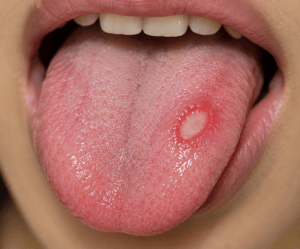
A typical mouth ulcer may look like a small white or yellowish sore surrounded by a red border. It can be quite painful, particularly when eating spicy, salty or acidic foods.
What causes oral ulcers?
There is no single cause of mouth ulcers. Common causes and triggers include:
1. Minor injury or irritation
This is one of the most common reasons for a single mouth ulcer.
It may follow:
- Accidentally biting the cheek or tongue
- A sharp tooth
- Rough or broken dental fillings
- Braces or dentures rubbing against the mouth
- Brushing too vigorously
- Eating very hot or hard foods
If the same spot repeatedly develops an ulcer, it is worth checking whether there is a persistent source of irritation.
2. Recurrent aphthous ulcers
Some people develop mouth ulcers repeatedly without an obvious injury. These are commonly called recurrent aphthous ulcers or recurrent aphthous stomatitis.
They usually occur on the softer lining of the mouth rather than on the outer lip. Smaller aphthous ulcers generally heal within about 7–10 days without scarring.
Recurrent ulcers can sometimes be associated with:
- Stress or lack of sleep
- Hormonal changes
- Certain foods
- Family tendency
- Nutritional deficiencies
- Certain medications
- Acid reflux (GERD)
The exact reason why some people develop recurrent aphthous ulcers is not always clear.
3. Nutritional deficiencies
Repeated mouth ulcers can sometimes occur in people with deficiencies such as:
- Iron
- Vitamin B12
- Folate
- Zinc
- Vitamin D
If ulcers are frequent, severe or associated with other symptoms, your doctor may decide whether blood tests are appropriate. Most people with recurrent mouth ulcers, however, do not have an underlying serious disease.
4. Infections
Some infections can cause multiple ulcers or sores in and around the mouth.
For example, hand, foot and mouth disease can cause mouth ulcers along with a characteristic rash on the hands and feet. Herpes simplex infection can also cause painful lesions, although cold sores around the lips are different from typical aphthous ulcers.
5. Medical conditions
Frequent or unusual oral ulcers can occasionally occur alongside conditions affecting other parts of the body, including:
- Coeliac disease
- Crohn’s disease
- Certain immune-related conditions
- Some skin or mucosal disorders
This is particularly worth considering when mouth ulcers occur together with symptoms such as persistent abdominal problems, skin lesions, genital ulcers or joint symptoms.
6. Medications
Some medicines can contribute to mouth ulcers in susceptible individuals. If your ulcers started after beginning a new medication, mention this to your doctor rather than stopping the medicine yourself.
How long do mouth ulcers take to heal?
Most ordinary mouth ulcers heal within 1–2 weeks.
Minor aphthous ulcers commonly heal within 7–10 days, although larger ulcers can take considerably longer.
If an ulcer is still present after three weeks, it should be examined by a doctor rather than simply treated repeatedly at home.
How can you treat an oral ulcer at home?
There is usually no instant cure for a simple mouth ulcer. Treatment is mainly aimed at reducing pain and avoiding further irritation while the ulcer heals.
Helpful measures include:
- Use a soft-bristled toothbrush.
- Drink plenty of fluids.
- Choose softer foods while the ulcer is painful.
- Avoid very spicy, salty or acidic foods.
- Avoid very hot drinks and foods.
- Avoid rough, crunchy foods that can traumatise the ulcer.
- Maintain good oral hygiene.
- A simple warm saline mouth rinse can help with discomfort.
For a saline rinse, dissolve ½ teaspoon of salt in a glass of warm water, rinse and spit it out rather than swallowing it.
An ENT specialist may also recommend pain-relieving gels or mouthwashes. In recurrent aphthous ulcers, topical corticosteroids may be prescribed, particularly when treatment is started early.
Do not repeatedly apply steroid preparations to an unexplained mouth ulcer without having it examined, particularly if the ulcer is persistent or unusual.
When should you see an ENT for a mouth ulcer?
Most occasional mouth ulcers are not a cause for concern.
You should arrange an evaluation if:
- The ulcer has not healed after 3 weeks
- The ulcer keeps recurring
- It is unusually large or deep
- It is becoming progressively more painful
- It bleeds easily
- There is a persistent lump or thickening
- You notice a persistent red or white patch
- There is numbness in the mouth or tongue
- You have difficulty swallowing or speaking
- You have unexplained weight loss
- You have a lump in the neck
- You have ulcers elsewhere on the body
- You have persistent abdominal, skin or joint symptoms
A persistent oral ulcer does not automatically mean cancer. Many benign conditions can produce ulcers. However, an ulcer that does not heal needs examination so that the cause can be identified.
Can a mouth ulcer be oral cancer?
Most mouth ulcers are not cancer.
However, an oral cancer can sometimes initially appear as a sore or ulcer that does not heal. Other warning signs include a persistent red or white patch, lump or thickening in the mouth, unexplained bleeding or numbness, difficulty swallowing or speaking, and a neck lump.
This is why the three-week rule is useful:
An unexplained mouth ulcer that persists for more than three weeks should be examined by a doctor.
This is especially important for people who smoke or chew tobacco, use areca nut/betel nut products, or have significant alcohol exposure, as these are established risk factors for oral cancer.
Do recurrent mouth ulcers need blood tests?
Not necessarily.
If ulcers are occasional and heal normally, investigations are usually not required.
However, when ulcers are frequent, severe, unusually persistent or associated with other symptoms, your doctor may consider blood tests to look for nutritional deficiencies or an underlying medical condition.
The tests should be guided by your symptoms and clinical examination rather than performed routinely for every mouth ulcer.
What is the difference between a mouth ulcer and a cold sore?
They are not the same thing.
Mouth ulcers, particularly aphthous ulcers, usually occur inside the mouth and are not contagious.
Cold sores are caused by herpes simplex virus and commonly occur on or around the lips. They may begin with tingling or burning and can appear as groups of small fluid-filled lesions.
The appearance and location of the lesion can help your doctor distinguish between the two.
Frequently Asked Questions
Are oral ulcers normal?
Occasional oral ulcers are very common and usually heal without treatment. A mouth ulcer that persists for more than three weeks, however, should be examined.
What is the fastest way to heal a mouth ulcer?
There is no instant cure for most mouth ulcers. Avoiding trauma and irritating foods, maintaining oral hygiene and controlling pain can make the healing period more comfortable. For recurrent aphthous ulcers, a doctor may prescribe a topical corticosteroid, which can reduce symptoms and help healing.
Why do I keep getting mouth ulcers?
Recurrent ulcers can be related to factors such as stress, hormonal changes, nutritional deficiencies, certain medications and individual or family tendency. Occasionally, recurrent ulcers can be associated with an underlying medical condition.
Are mouth ulcers contagious?
Typical aphthous mouth ulcers are not contagious. They should be distinguished from infections such as herpes simplex, which can cause contagious lesions.
When is a mouth ulcer serious?
A mouth ulcer deserves medical assessment when it does not heal within three weeks, repeatedly occurs in the same location, is unusually large or persistent, or occurs with a lump, persistent red or white patch, bleeding, numbness, difficulty swallowing, neck swelling or unexplained weight loss.
Should I see an ENT for a mouth ulcer?
An ENT specialist can evaluate persistent or unusual ulcers, particularly when they involve the tongue, throat or other areas of the head and neck.
Conclusion
Most oral ulcers are temporary and harmless. They usually settle within one to two weeks with simple supportive care.
But don’t keep treating an ulcer indefinitely at home.
If a mouth ulcer has not healed within three weeks, or if it is unusual, recurrent, bleeding, associated with a lump or accompanied by other concerning symptoms, get it examined.
Early evaluation does not mean that something serious is necessarily present—it simply ensures that persistent oral lesions are not overlooked.
If you are unsure about the cause of a persistent or recurrent mouth ulcer, an ENT, dentist or oral medicine specialist can assess the lesion and decide whether any further investigation is needed.
Related Reads
- Why Does My Throat Hurt? Common Causes of Sore Throat
- Acid Reflux and Throat Symptoms: Understanding LPR
- When Should You See an ENT Specialist?
This article is for general information and does not replace an in-person medical examination.
 Dr. Preethi Umamaheswaran MS DNB (ENT)