
What is Tympanoplasty?
Tympanoplasty is a surgical procedure used to repair a damaged eardrum (tympanic membrane). This damage can occur due to various reasons, including infections, trauma, or congenital defects. The procedure involves reconstructing the eardrum to improve hearing and prevent further complications.
Why Do You Need Tympanoplasty?
If you have experienced hearing loss, ear pain, or drainage / discharge from your ear, you may be a candidate for tympanoplasty. Your doctor will evaluate your condition and determine if this procedure is appropriate for you.
What Happens During Tympanoplasty?
The tympanoplasty procedure typically involves the following steps:
- Anesthesia: You will be given anesthesia to ensure you are comfortable during the surgery.
- Incision: The surgeon will make a small incision on your ear.
- Exposure: The ear canal will be gently retracted to expose the damaged eardrum.
- Repair: The surgeon will use a graft material (Tragal cartilage or Temporalis fascia), to repair the eardrum.
- Closure: The incision will be closed with stitches.
Our technique:
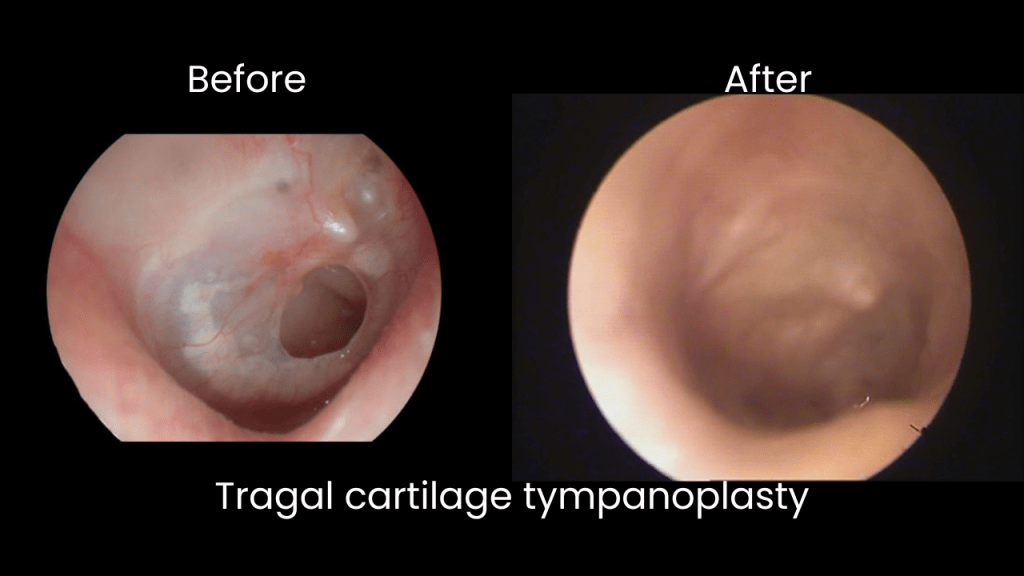
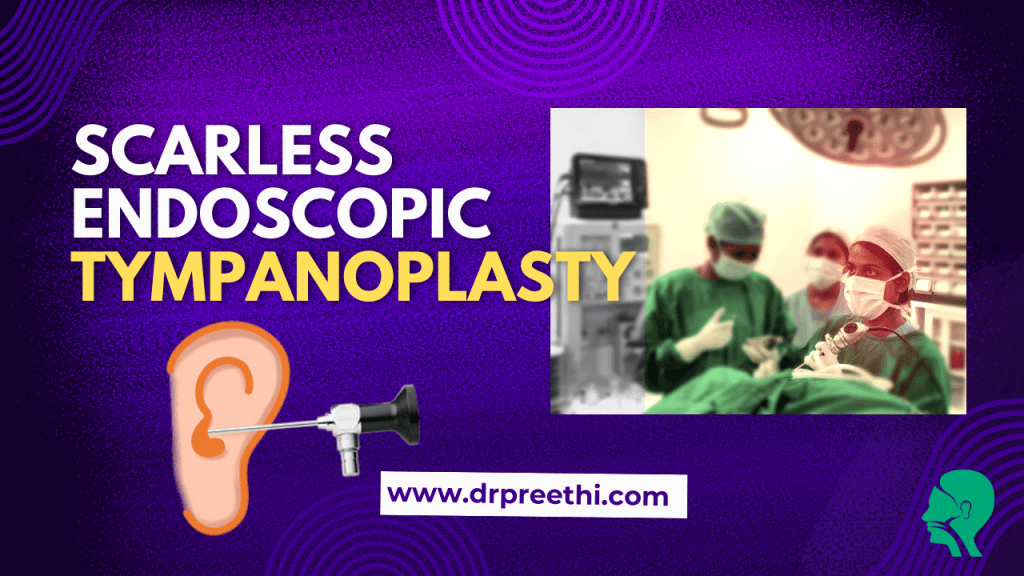
We are known to perform Endoscopic cartilage tympanoplasty. We use tragal cartilage graft to close the tympanic membrane perforation and have found great success in graft uptake. This procedure is basically scarless which gives great cosmetic results in addition to hearing improvement.
Dr. Preethi’s publication on cartilage tympanoplasty can be found here.
Our Result as seen at three weeks after surgery:
What to Expect After Tympanoplasty
Recovery time after tympanoplasty varies from person to person. You may experience some discomfort or swelling in your ear. It is important to follow your doctor’s instructions for aftercare, which may include:
- Avoiding water entering your ear
- Taking prescribed medications
- Attending follow-up appointments
Will Tympanoplasty Improve My Hearing?
The success of tympanoplasty in improving hearing depends on several factors, including the extent of the eardrum damage and the overall health of your ear. Many patients experience significant improvement in their hearing after the procedure.
Are There Any Risks Associated with Tympanoplasty?
As with any surgical procedure, there are potential risks associated with tympanoplasty. These may include:
- Infection
- Bleeding
- Recurrence of eardrum perforation
- Dizziness or vertigo
It is important to discuss these risks with your doctor before deciding to undergo the procedure.
If you have any questions about tympanoplasty or would like to schedule a consultation, please contact your doctor.
 Dr. Preethi Umamaheswaran MS DNB (ENT)
3 responses to “Scarless tympanoplasty: A guide for patients”
Nice article
LikeLike
[…] surgery: In some cases, if the eardrum doesn’t heal on its own, a simple procedure called an tympanoplasty may be necessary to repair the hole. Read in detail about tympanoplasty […]
LikeLike
[…] you’ve recently undergone mastoidectomy or tympanoplasty you’re likely on the path to improved hearing and a healthier ear. However, the recovery […]
LikeLike