
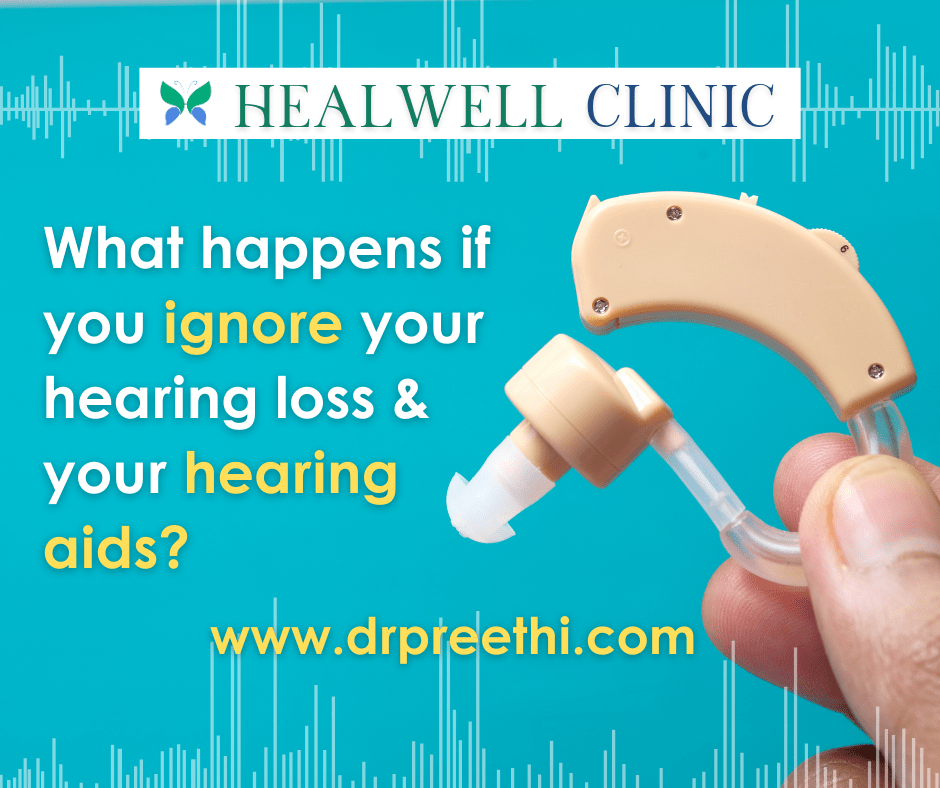
If you’ve been diagnosed with hearing loss, neglecting to consistently use your hearing aids can have far-reaching consequences that extend beyond simply missing out on sounds.
As ENT specialists, we see firsthand the impact of untreated hearing loss. It’s not just about volume; it’s about connection, communication, and overall well-being. So, what exactly happens when you choose silence over sound? Let’s delve into some of the key consequences:
1. Worsening Communication and Social Isolation:
This is perhaps the most immediate and obvious impact. Without hearing aids, understanding conversations becomes a struggle. You might find yourself:
- Asking people to repeat themselves constantly: Leading to frustration for both you and your communication partners.
- Misunderstanding words and phrases: Causing awkward or even embarrassing situations.
- Withdrawing from social gatherings: Because the effort of trying to follow conversations becomes too exhausting.
- Feeling isolated and lonely: As your ability to connect with others diminishes.
Over time, this social withdrawal can lead to feelings of depression and anxiety. The very fabric of your relationships can be strained by communication barriers.
2. Cognitive Decline and Increased Risk of Dementia:
Emerging research strongly suggests a link between untreated hearing loss and accelerated cognitive decline, including an increased risk of dementia. While the exact mechanisms are still being studied, several theories exist:
- Cognitive Overload: Your brain has to work much harder to decipher fragmented sounds, leaving fewer cognitive resources for memory and other functions.
- Brain Shrinkage: Studies have shown that areas of the brain responsible for hearing can shrink when not stimulated.
- Reduced Social Interaction: As mentioned earlier, social isolation is a known risk factor for cognitive decline.
Using hearing aids provides the necessary auditory stimulation, allowing your brain to process sound efficiently and potentially mitigating these risks.
3. Increased Risk of Falls:
Believe it or not, your ears play a crucial role in balance. Even mild hearing loss can disrupt your spatial awareness and make you more prone to falls. This risk increases significantly when hearing loss is left unaddressed. Hearing aids can help improve your awareness of your surroundings and contribute to better balance.
4. Reduced Quality of Life:
The cumulative effect of communication difficulties, social isolation, and potential cognitive decline significantly impacts your overall quality of life. You might find yourself:
- Missing out on enjoyable activities: Like listening to music, attending concerts, or participating in group discussions.
- Feeling less independent: Relying more on others to understand information.
- Experiencing increased stress and fatigue: Due to the constant effort of trying to hear.
- Having a diminished sense of well-being: Feeling disconnected from the world around you.
5. Professional and Personal Setbacks:
In the workplace, untreated hearing loss can lead to misunderstandings, missed instructions, and difficulty participating in meetings. This can hinder your career progression and even impact job security. Personally, it can strain relationships with family and friends, leading to frustration and resentment.
The Solution is Within Reach:
If you’ve been diagnosed with hearing loss and have been prescribed hearing aids, they are not just a piece of technology; they are a vital tool for maintaining your health, well-being, and connection to the world.
Here’s why consistent hearing aid use is crucial:
- Improved Communication: You’ll be able to participate more fully in conversations and reconnect with loved ones.
- Enhanced Cognitive Function: By providing auditory stimulation, hearing aids can help preserve cognitive abilities.
- Better Balance: Reducing your risk of falls and improving your spatial awareness.
- Increased Quality of Life: Allowing you to enjoy life to the fullest and maintain your independence.
- Stronger Relationships: Fostering better understanding and reducing communication-related stress.
Don’t let your hearing aids gather dust. If you’re struggling with your current devices, have questions about their use, or suspect you might have hearing loss, schedule an appointment with us today. We can help you find the right hearing solution and guide you on your journey to better hearing and a richer, more connected life.
Ignoring your hearing loss is not a sign of strength; it’s a decision with significant consequences. Embrace the technology that can help you hear, connect, and thrive. Your ears – and your overall well-being – will thank you.
Click here to read in detail about how to choose a hearing aid.
Click here to read in detail about the cost of hearing aids in India.
 Dr. Preethi Umamaheswaran MS DNB (ENT)