
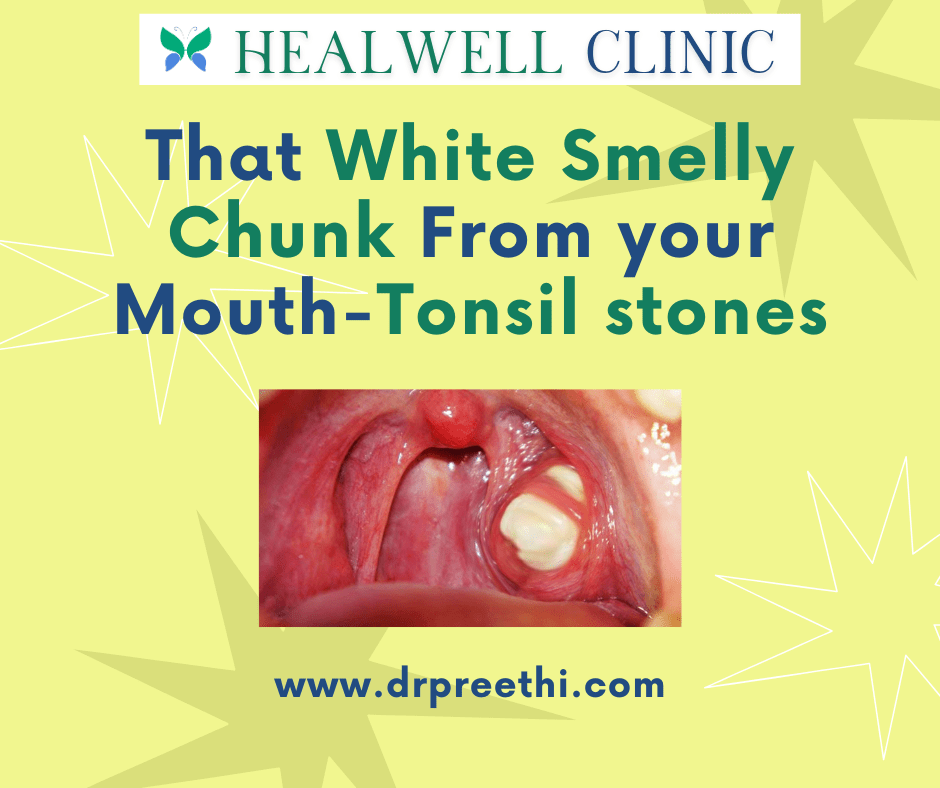
Ever coughed up a tiny, off-white, foul-smelling chunk? You’re not alone. Many people experience tonsil stones, also known as tonsilloliths. While often harmless, they can be a nuisance and cause some concern.
What are Tonsil Stones?
Tonsil stones are small, calcified deposits that become trapped in the crevices (crypts) of your tonsils. Your tonsils, those lumpy masses at the back of your throat, are part of your immune system, designed to trap bacteria and debris. These crypts, while helpful for trapping invaders, can also become a breeding ground for these stones.
These stones are essentially a collection of:
- Dead cells: Shed from the lining of your mouth and throat.
- Bacteria: Naturally present in your oral cavity.
- Mucus: Secreted by your tonsils and surrounding tissues.
- Food debris: Tiny particles that get lodged in the crypts.
Over time, this debris hardens, or calcifies, forming the characteristic white or yellowish stones.
Why Do They Form?
Several factors can contribute to the formation of tonsil stones:
- Deep Tonsil Crypts: People with deeper tonsil crypts are more prone to developing stones, as these crevices provide more space for debris to accumulate.
- Poor Oral Hygiene: Inadequate brushing and flossing can increase the amount of bacteria and debris in the mouth.
- Frequent Tonsillitis: Repeated infections can cause inflammation and scarring, leading to enlarged crypts.
- Chronic Sinus Issues: Postnasal drip can provide a constant source of mucus that contributes to stone formation.
Symptoms of Tonsil Stones:
Many tonsil stones are small and cause no symptoms. However, larger stones can lead to:
- Bad breath (halitosis): This is often the most noticeable symptom due to the sulfur-producing bacteria within the stones.
- Sore throat: A mild, persistent sore throat or scratchy feeling.
- Difficulty swallowing: A sensation of something being stuck in the throat.
- Ear pain: In some cases, tonsil stones can cause referred pain to the ear.
- White or yellowish chunks visible on the tonsils: This is the most obvious sign.
- Metallic taste: some people report this symptom.
What Can You Do About Them?
In many cases, tonsil stones resolve on their own. However, if they are causing discomfort, here are some options:
- Gargling with salt water: This can help dislodge small stones and reduce inflammation.
- Increased hydration: This can help to wash away debris.
- Use a mouth wash: Use a diluted mouth wash after every meal. Contact your ENT specialist for more details.
- See an ENT (Ear, Nose, and Throat) specialist: If you experience frequent or large tonsil stones, or if they are causing significant discomfort, an ENT specialist can provide professional evaluation and treatment.
- Tonsillectomy: In rare cases, if tonsil stones are severe and recurrent, a tonsillectomy (surgical removal of the tonsils) may be recommended.
When to See a Doctor:
- Persistent bad breath that doesn’t improve with oral hygiene
- Large stones that interfere with daily life.
- Pain
- Difficulty in swallowing
- Bleeding from the tonsils
Tonsil stones are a common and usually harmless occurrence. By practicing good oral hygiene and being aware of the symptoms, you can manage them effectively. If you have any concerns, don’t hesitate to consult with an ENT specialist.
 Dr. Preethi Umamaheswaran MS DNB (ENT)