
What is Stapedectomy?
Stapedectomy is a delicate surgical procedure performed to improve hearing loss caused by otosclerosis. This condition occurs when the stapes, one of the three tiny bones (ossicles) in the middle ear, becomes hardened and stiff. This stiffness hinders the transmission of sound waves to the inner ear, resulting in conductive hearing loss. Stapes surgery makes the ear ossicles vibrate well enough to conduct sound better.
How Does Stapedectomy Work?
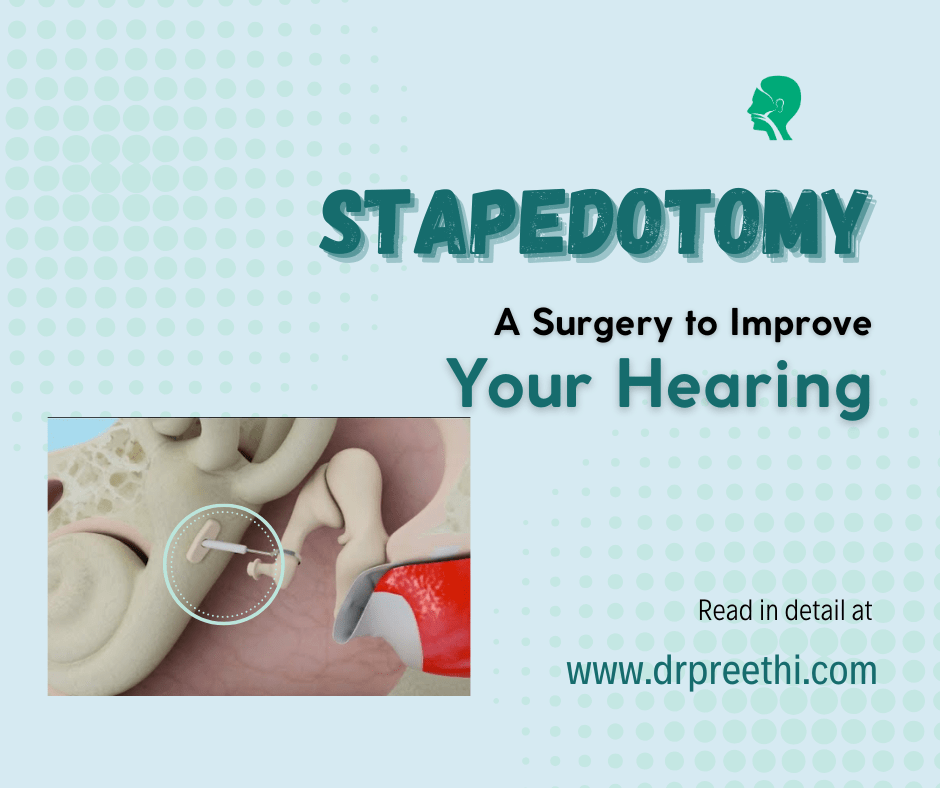
During stapedectomy, a skilled ear surgeon removes the diseased stapes bone and replaces it with a tiny prosthesis. This prosthesis, often made of teflon, helps restore the normal vibration and sound conduction process in the middle ear.
The Stapedectomy Procedure
Stapedectomy is typically performed under general anesthesia. Here’s a brief overview of the procedure:
- Exposure of the Middle Ear: The surgeon carefully accesses the middle ear through the ear canal.
- Removal of the Stapes: The diseased stapes bone is removed.
- Insertion of the Prosthesis: A tiny prosthesis is placed in the position of the removed stapes bone.
- Closure: The incision is closed, and a small piece of tissue may be placed to prevent infection.
Recovery and Aftercare
After the surgery, patients may experience some discomfort and hearing changes. However, most people recover quickly. Here are some post-operative care tips:
- Avoid Water Exposure: Keep the ear dry to prevent infection.
- Avoid Loud Noises: Protect your ears from loud sounds.
- Follow Doctor’s Instructions: Adhere to your doctor’s specific post-operative care plan.
Benefits of Stapedectomy
Stapedectomy can significantly improve hearing loss in many patients. It can:
- Enhance Hearing Quality: Restore clear and detailed sound perception.
- Improve Speech Understanding: Make it easier to understand conversations, especially in noisy environments.
- Reduce Hearing Aid Dependence: In some cases, stapedectomy may eliminate the need for hearing aids.
Is Stapedectomy Right for You?
If you’re experiencing conductive hearing loss due to otosclerosis, stapedectomy may be a suitable option. However, it’s important to consult with an experienced ear, nose, and throat (ENT) specialist to determine the best course of treatment for your individual needs.
Remember, while stapedectomy is a highly effective procedure, it’s crucial to choose a qualified surgeon and follow post-operative instructions carefully to achieve optimal results.
 Dr. Preethi Umamaheswaran MS DNB (ENT)
One response to “Stapedectomy: A Tiny Surgery, A Big Impact”
[…] stapes surgery. During this procedure, the damaged stapes bone is replaced with a prosthetic bone. Click here to read in detail about the surgical treatment for […]
LikeLike