
Tonsillectomy and adenoidectomy, often referred to as adenotonsillectomy surgery, is a common procedure performed to remove the tonsils and adenoids, tissues in the back of the throat and nose that help fight infection. While typically performed on children, adults can also benefit from this surgery if they experience frequent tonsillitis or enlarged adenoids.
What to Expect During Surgery:
- Anesthesia: You will receive general anesthesia, putting you into a deep sleep during the procedure.
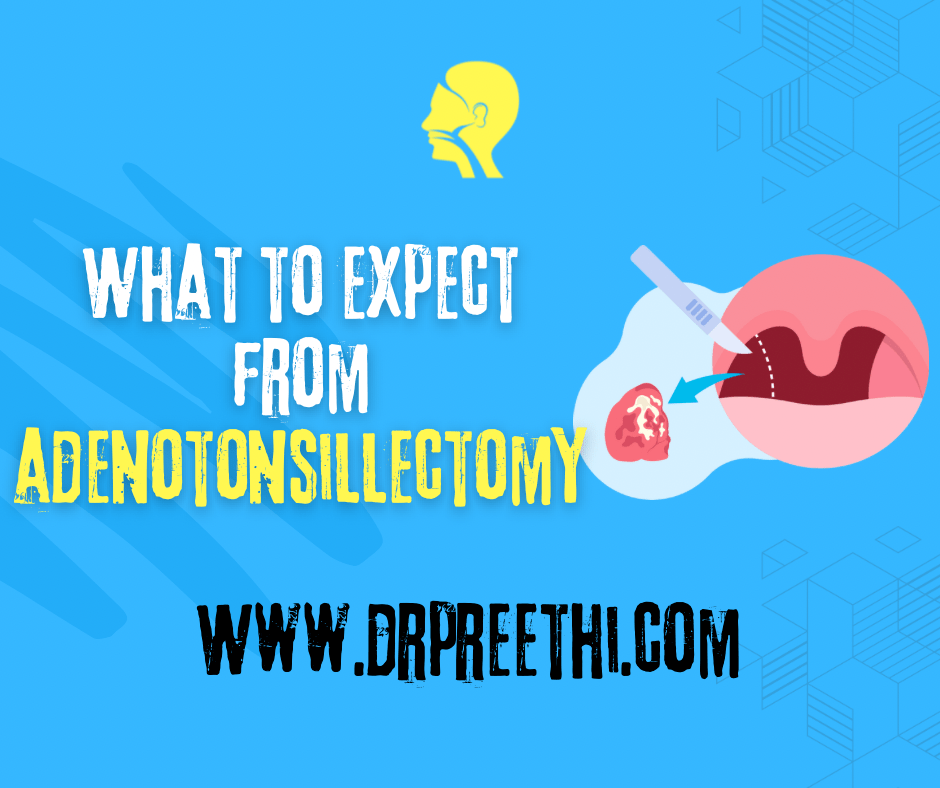
- The Procedure: The surgeon removes the tonsils and adenoids through the mouth using specialized instruments.There are no external cuts involved which also indicates that you won’t have any external scars!
- Recovery: After surgery, you’ll be monitored in a recovery room until fully awake and stable before being shifted to ward.
Preoperative Preparation:
To ensure a smooth surgery and recovery, here are some key steps for preoperative preparation:
- Fasting Instructions: You will likely be instructed to avoid food and drink for a specific period before surgery.
- Medications: Certain medications may need to be stopped before surgery. Discuss this with your doctor.
- Logistics: You might have to stay in the hospital for a day or two depending on your recovery from anesthesia and pain. Arrange for someone to drive you home after discharge and help you with recovery for the first few days.
Postoperative Care and Management:
Recovery from adenotonsillectomy typically takes 1-2 weeks. Here’s what to expect and how to manage your recovery:
- Pain Management: You will experience a sore throat, especially during the first few days. Your doctor will prescribe pain medication to manage this discomfort.
- Diet: Stick to soft, cool, and non-irritating foods like Idly, dosa, idiyappam, aappam, curd rice. Avoid hot, spicy, or crunchy foods that can irritate or injure the surgical site.
- Rest: Plan for plenty of rest during the first few days. Your body needs time to heal.
- Hydration: Drink plenty of fluids to stay hydrated and prevent dehydration, which can worsen discomfort.
- Oral Hygiene: Gently rinse your mouth with diluted betadine solution after every meal to promote healing and prevent infection.
- Activity: Avoid strenuous activity until your doctor clears you.
- Follow-up Appointment: Schedule a follow-up appointment with your doctor to monitor your healing progress.
Remember: Every patient recovers at their own pace. If you experience any concerning symptoms like severe pain, bleeding, or difficulty breathing, contact your doctor immediately.
By understanding what to expect during adenotonsillectomy and following proper preoperative and postoperative care, you can ensure a smooth recovery and get back to feeling your best as soon as possible.
 Dr. Preethi Umamaheswaran MS DNB (ENT)